546,567 events
The atlas
The world in any year from 3500 BCE to today: realms and their borders, events where they happened, wonders, trade routes and faiths, with a stream of time to travel by.
Charting the ages
546,567 events and 124 realms from 3500 BCE to the present day: their borders, their annals, and the stories behind them.
The atlas
Drag the stream of time or press play: realms rise and fall, events light up where they happened, and the deeds of the age are listed beside the map.
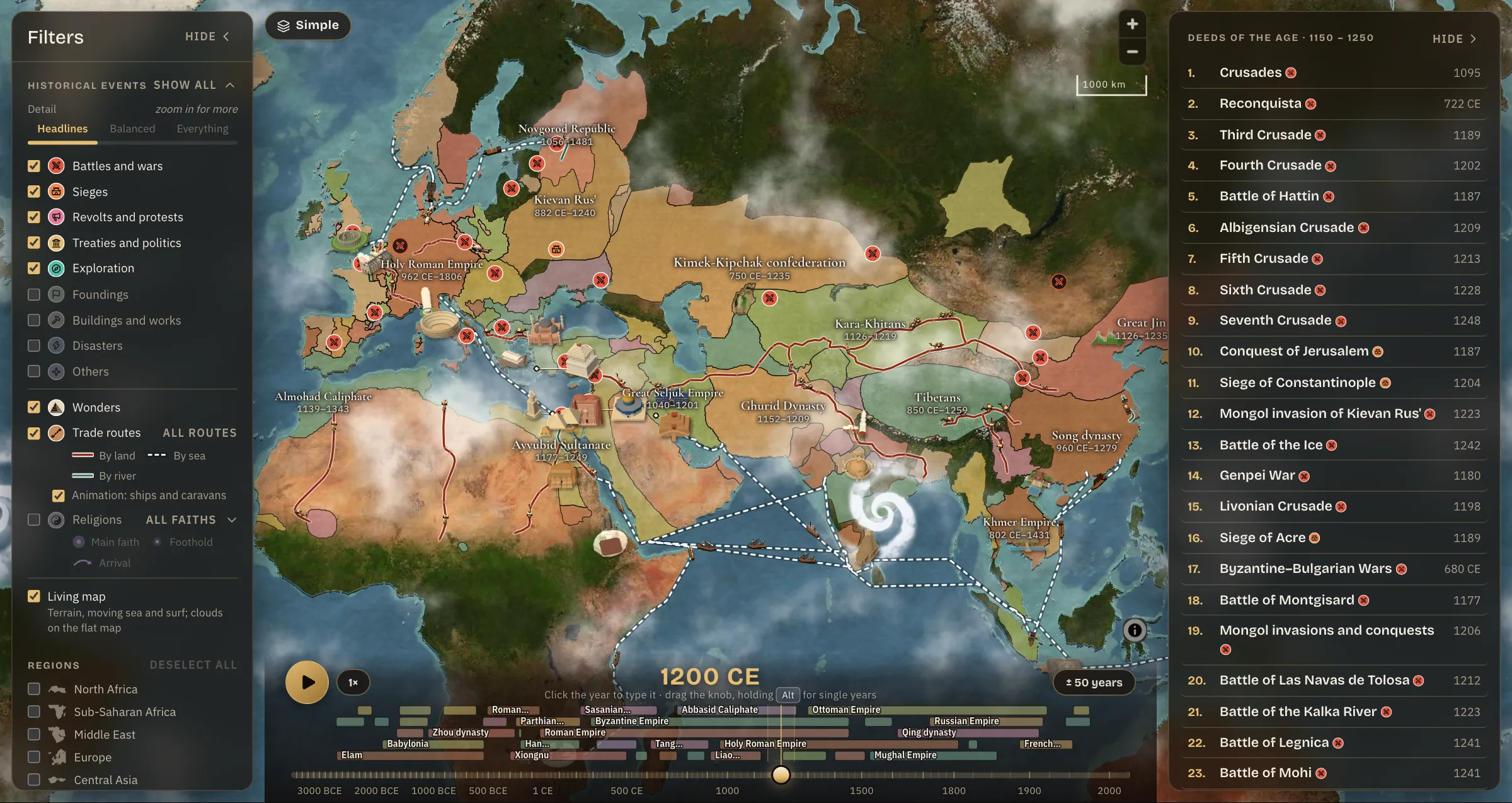
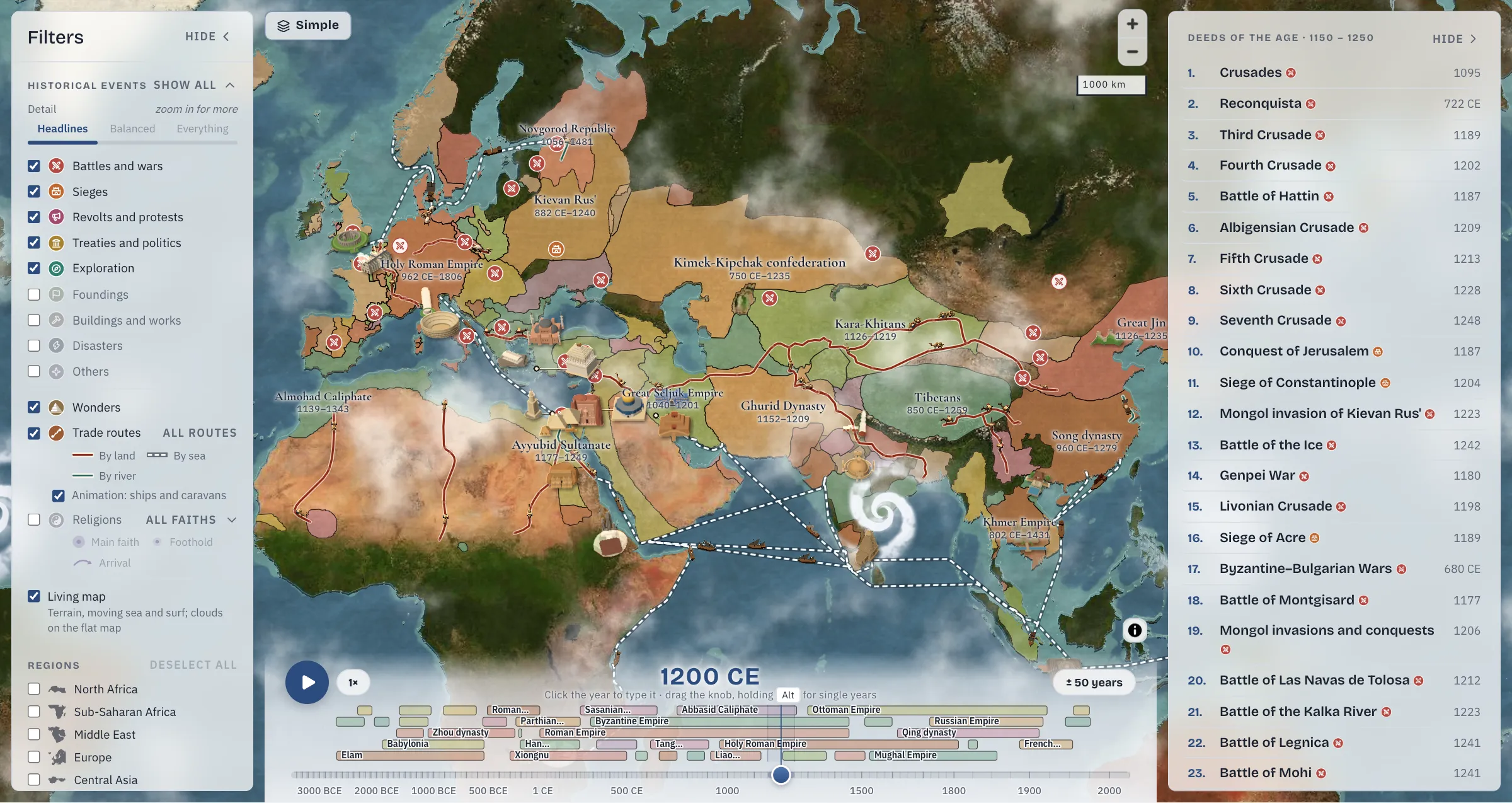
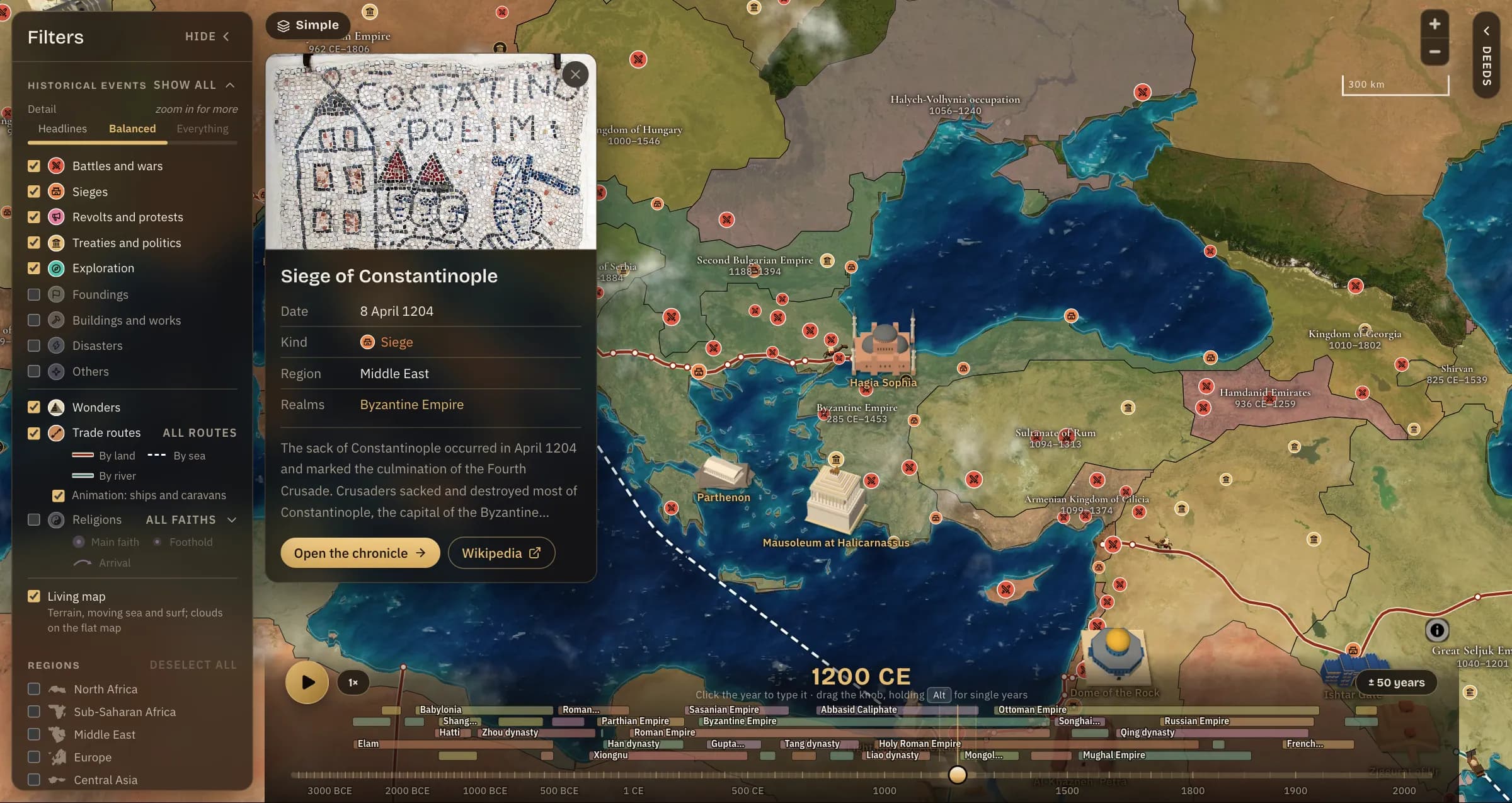
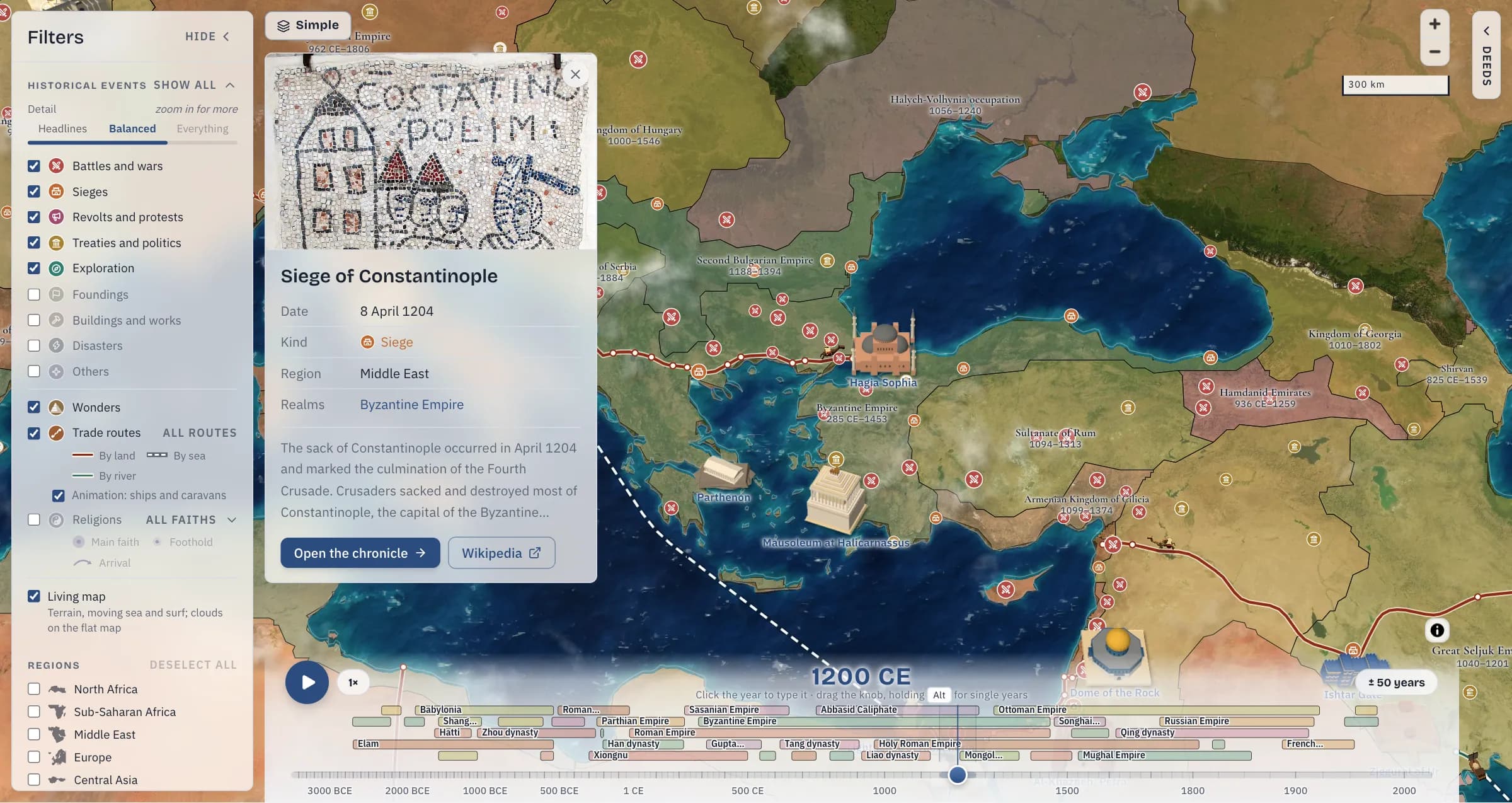
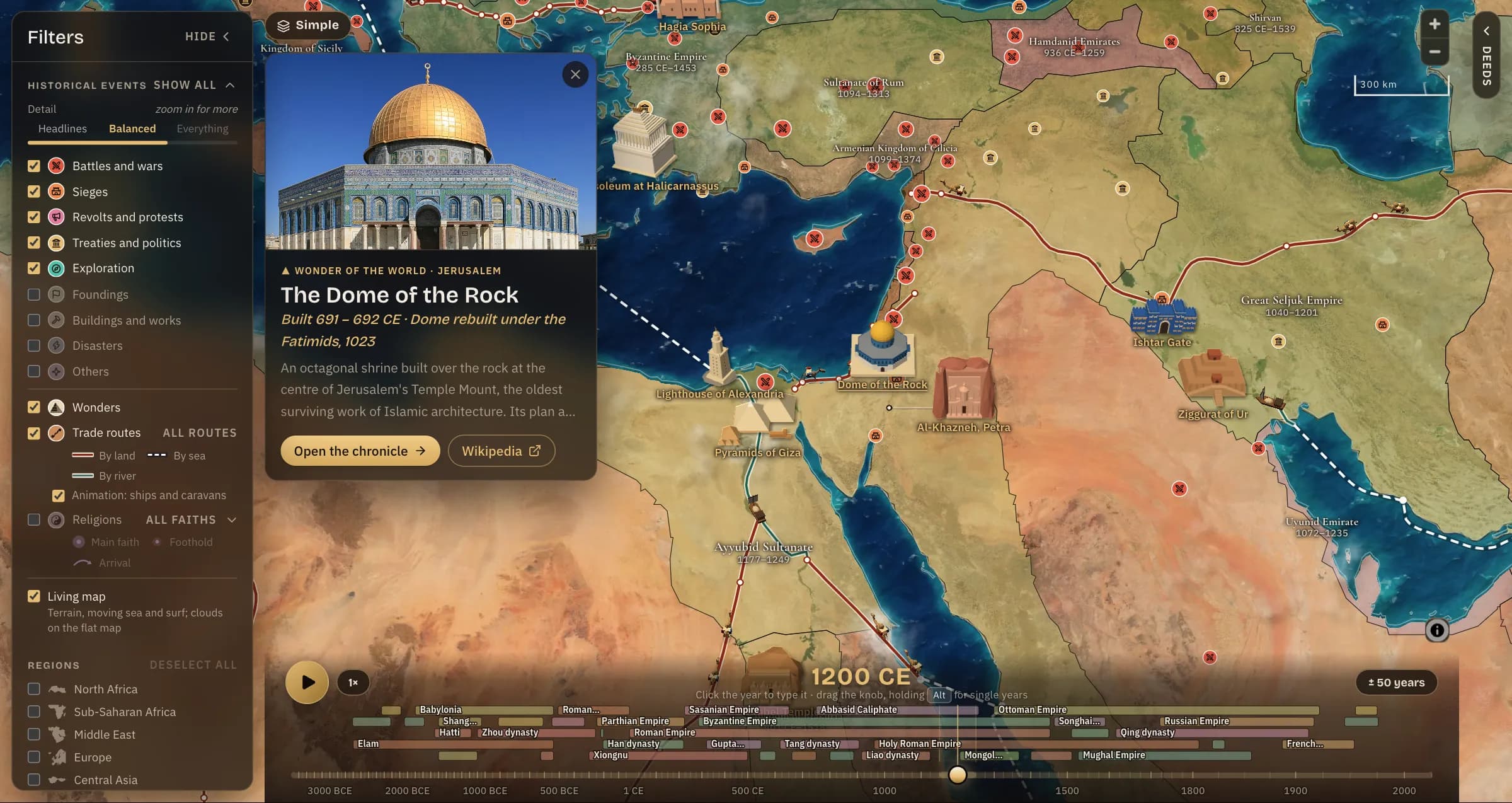
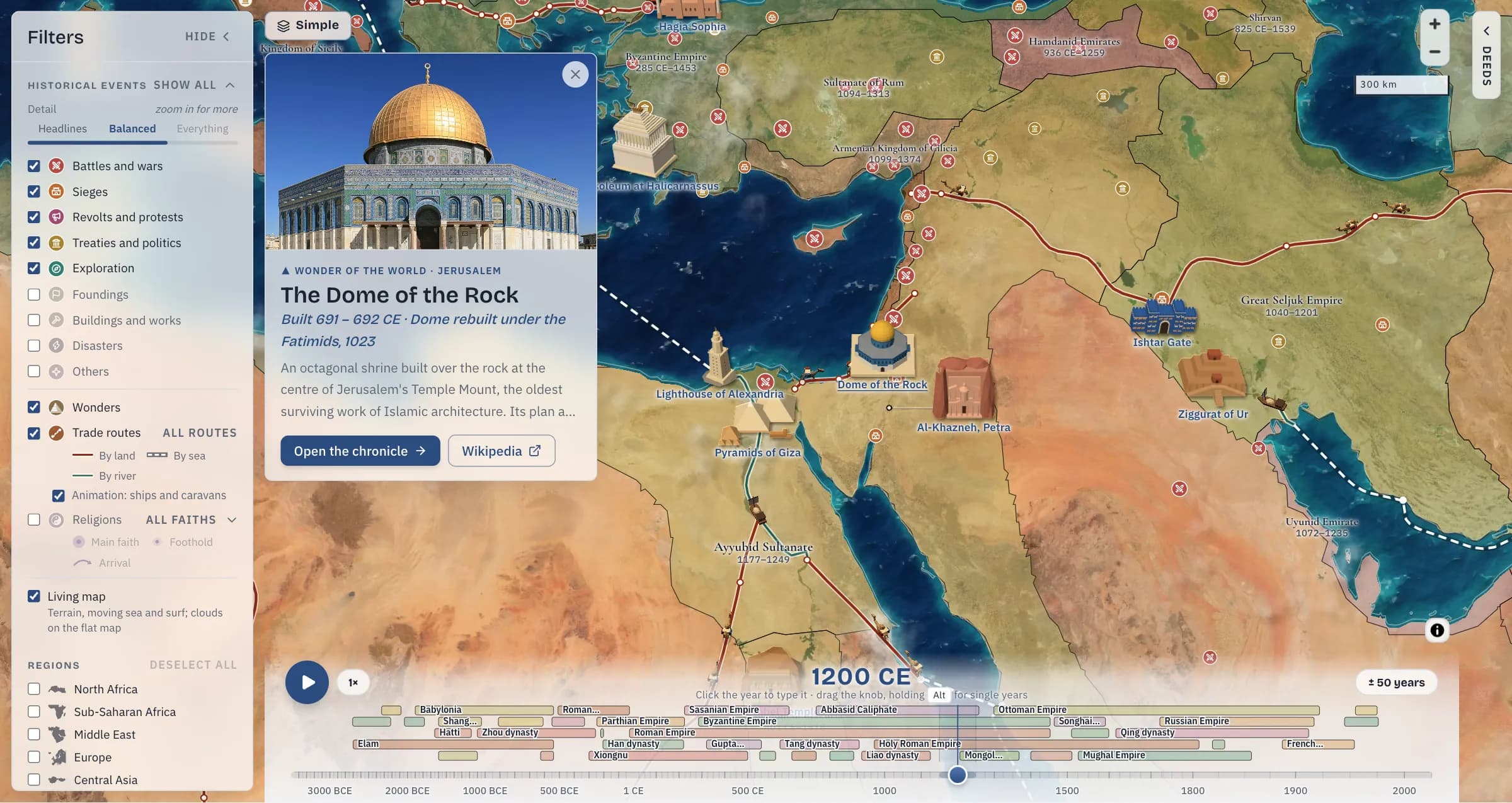
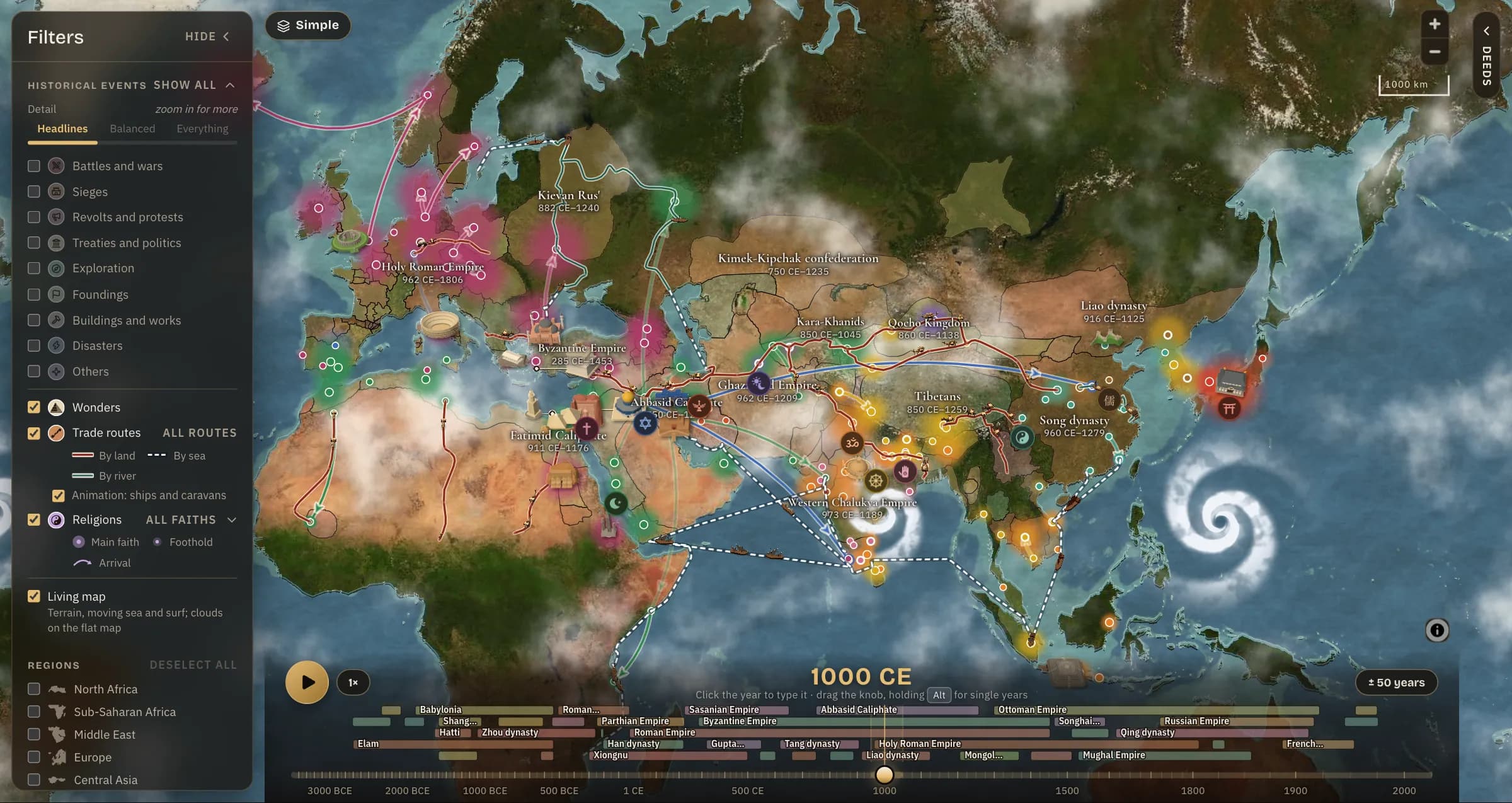
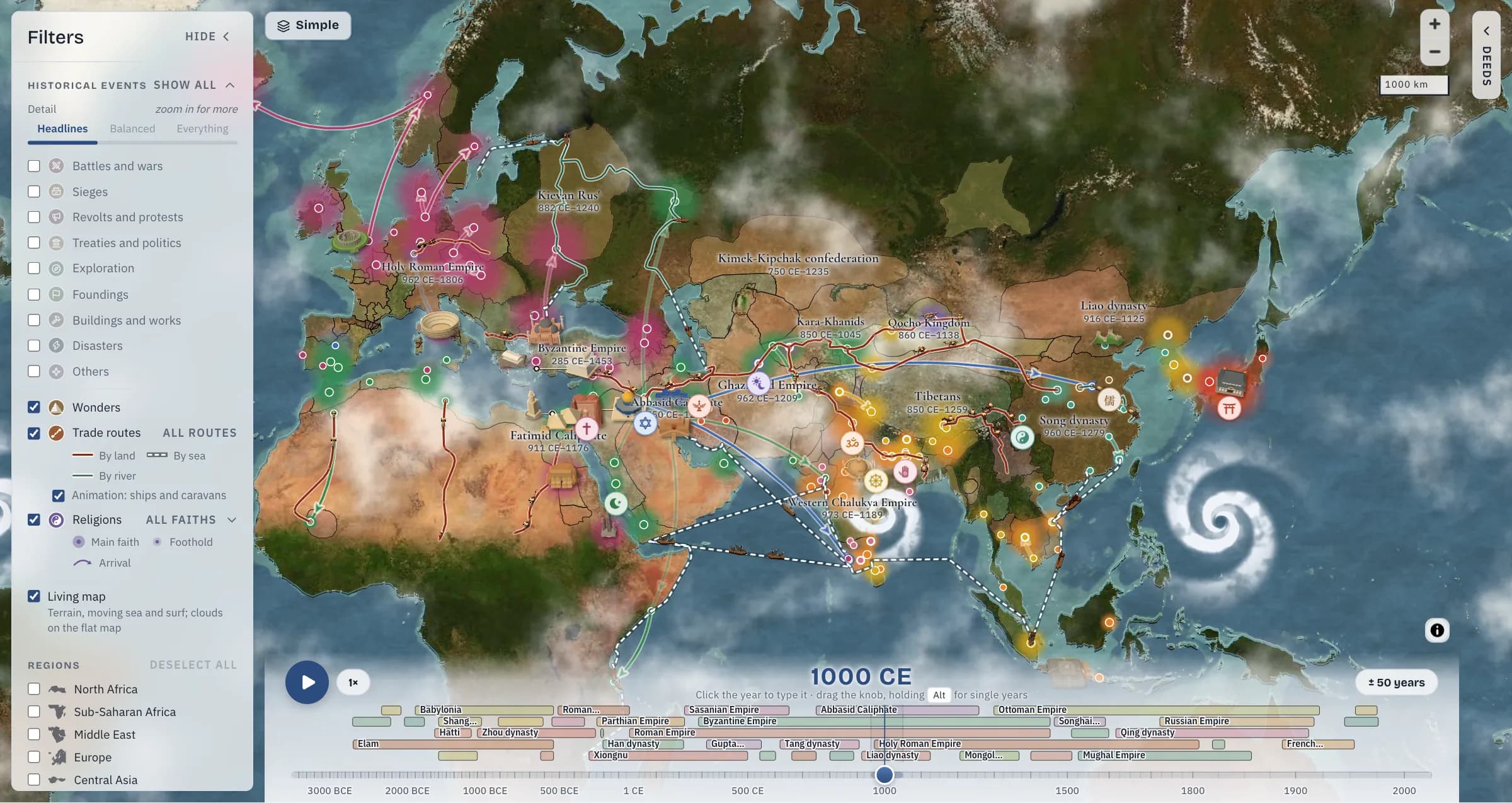
Step into any moment of the past and see the whole world at once: who ruled, what happened and what stood.
More than 500,000 battles, treaties, revolts and voyages, each in its place. The closer you look, the more you find.
50 wonders of the world, modelled in 3D, rise in the very years they were built.
Ride with caravans and ships along 66 trade routes, and watch 14 faiths spread across the world.
What is inside
The world in any year from 3500 BCE to today: realms and their borders, events where they happened, wonders, trade routes and faiths, with a stream of time to travel by.
Each civilization with its story, its lands over the centuries, its wonders and its trade. Set any two side by side on one timeline.
Famous fields replayed phase by phase: where each army stood, how it moved, and the hour the day was decided.
How goods moved: caravan roads, sea lanes and rivers, each drawn on the atlas in the years it carried trade.
Where each faith began and how it travelled: with missionaries and merchants, armies and exiles.
From the Pyramids of Giza to the Sydney Opera House, each stands on the map as a small model for as long as it stood.
Compare
Pick any two of 124 civilizations and set their dates, lands and deeds on one timeline. Or begin with a pair that history names together most often.
68 shared events · side by side for 366 years
Among them: Roman–Persian Wars (54 BCE), Muslim conquest of Persia (633 CE)
Compare them
68 shared events · side by side for 196 years
Among them: Crimean War (1853), Gallipoli Campaign (1915)
Compare them
40 shared events · side by side for 507 years
Among them: Italian Wars (1494), Battle of Vienna (1683)
Compare them
39 shared events · side by side for 508 years
Among them: Arab–Byzantine wars (629 CE), Second Crusade (1147)
Compare them
39 shared events · side by side for 427 years
Among them: Battle of Edessa (260 CE), Battle of Ctesiphon (363 CE)
Compare them
10 shared events · side by side for 20 years
Among them: Vietnam War (1955), Cambodian Civil War (1967)
Compare them
Wonders of the world
From every region, each rises on the map while it was built and stands whole for as long as it stood. Here is one from each part of the world.


Astra is Latin for the stars. A star is seen only as it was, by light that left it long ago, and it can never be touched: so it is with time. And as in astronaut, the “star sailor”, the visitor here travels through time.